| What's Regulation? |

| © 2000-2021 Concert Pitch Piano Services. All rights reserved. |

| . |
| . |
| . |
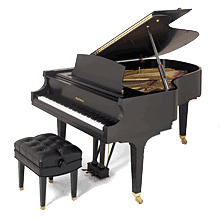

The inner playing mechanism, called the "action" of a piano, is an amazingly complex and sensitive
machine. Like any other machine, it needs to be kept in adjustment so that it works the way it was meant to
work when it was built. Each key on your piano has over 25 points of adjustment which need to work
together to produce the sound you hear when you play just one note!
In order to compensate for wear, compacting of cloth & felt, and changes in wooden parts due to humidity,
periodic adjustments must be made. Keeping the correct relationship between every part will prevent
unnecessary wear, and will make the action "feel right" - that is, each key will function smoothly and evenly
throughout the whole keyboard. No more sticking keys, uneven feel, notes that don't do what you want them
to do, pedals that don't work properly, squeaks, clicks, rattles, buzzes and so on.
machine. Like any other machine, it needs to be kept in adjustment so that it works the way it was meant to
work when it was built. Each key on your piano has over 25 points of adjustment which need to work
together to produce the sound you hear when you play just one note!
In order to compensate for wear, compacting of cloth & felt, and changes in wooden parts due to humidity,
periodic adjustments must be made. Keeping the correct relationship between every part will prevent
unnecessary wear, and will make the action "feel right" - that is, each key will function smoothly and evenly
throughout the whole keyboard. No more sticking keys, uneven feel, notes that don't do what you want them
to do, pedals that don't work properly, squeaks, clicks, rattles, buzzes and so on.

| CONCERT PITCH PIANO SERVICES |
| See an upright piano action See an upright piano key in motion See a grand piano action See a grand piano key in motion See how a grand piano is constructed |
| | EXPERIENCED |
| CERTIFIED |
