| What's Voicing? |
| see hammer voicing tools technicians use to voice a piano |


| © 2000-2021 Concert Pitch Piano Services. All rights reserved. |
| This video gives a general idea of voicing, but keep in mind that voicing is an art that takes many years of experience to develop and should only be attempted by a knowledgeable piano technician. |
| . |
| . |
| . |
| CONCERT PITCH PIANO SERVICES |
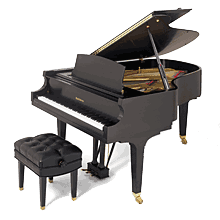


Every piano has its own distinct sound or "voice".
In many ways, that's how it was built and that is
its personality.
But over time, the more a piano is played, the
more the hammer felt that strikes the strings
wears down and compacts.
This hardening can cause the tone to become
too harsh or bright, and it's difficult to produce a
wide or even range of expression or tone, no
matter how much you try to play using dynamics.
In other situations, the piano may seem too dull
or lifeless for your taste with little natural sustain.
In many ways, that's how it was built and that is
its personality.
But over time, the more a piano is played, the
more the hammer felt that strikes the strings
wears down and compacts.
This hardening can cause the tone to become
too harsh or bright, and it's difficult to produce a
wide or even range of expression or tone, no
matter how much you try to play using dynamics.
In other situations, the piano may seem too dull
or lifeless for your taste with little natural sustain.
Either way, a technician can treat the hammers in
various ways: by aligning, shaping, carefully
needling or hardening the hammers, in order to
come closer to the tone you're looking for.
Keep in mind, however, that a piano has to be
finely tuned, the strings properly seated on their
bearing points, and regulated before the
hammers can be voiced.
various ways: by aligning, shaping, carefully
needling or hardening the hammers, in order to
come closer to the tone you're looking for.
Keep in mind, however, that a piano has to be
finely tuned, the strings properly seated on their
bearing points, and regulated before the
hammers can be voiced.
| For an in-depth discussion on piano voicing, see the Piano Technicians Guild site |
| | EXPERIENCED |
| CERTIFIED |
