Buying a new piano can be an overwhelming experience. With so many brands, styles and features, where
do you start? Well, at the beginning:
INITIAL CONSIDERATIONS:
Proficiency Level
In general, it's a good idea to buy a piano of slightly higher quality than you think you deserve, and then grow
into it. If there are several pianists in the family, aim your purchase toward the most advanced. A higher
quality piano is an excellent investment, and will hold its value well. So, if piano lessons don't work out in
the family, at least you can re-sell it at a price fairly close to what you paid for it.
Space
- Upright pianos need about a 5 feet wide x 5 feet deep area (including space for the pianist and bench)
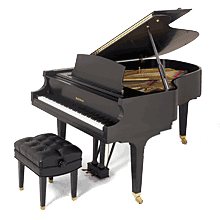
- Grand pianos need a space about 5 to 7 feet wide. The length required will range from
4 1/2 to 9 1/2 feet, depending on the model, plus another 2 feet for the pianist and bench.
Make sure the piano can be placed away from sources of heat and cold like radiators, heating vents, air
conditioners, direct sunlight and fireplaces.
Money
Buy the tallest upright or the longest grand that you can afford. The longer the strings and the bigger the
soundboard, the better the tone.
Grand or Upright?
Space, money and proficiency will be the deciding factors here. Grand pianos are generally superior
instruments to uprights. The action of a grand piano allows for faster repetition of notes, and for better, more
subtle control of expression and tone than upright pianos. The exception to this rule is the "Baby grand". Any
grand piano under 5 feet long should be avoided as a serious instrument. A full sized upright will sound
better, at a cheaper cost.
What Brands Are Best?
Today's piano market is flooded with thousands of pianos coming from countries like the U.S., Austria,
Germany, Czechoslovakia, Korea, Japan, Indonesia, China and Russia. With so many models and price
points offering different features for different segments of the public, it is impossible to generalize the quality
of one brand over another. An excellent wealth of information can be found in Larry Fine's The Piano Book.
Links to the major manufacturers can be found by clicking here. As always, before you purchase, have the
piano inspected by a piano technician, who can give you inside information on the make and model you are
considering.
Furniture
Although it is important for you to be happy with a beautiful-looking instrument, don't let it be the deciding
factor in purchasing a fine quality musical instrument. Let the quality of construction, the tone and the feel of
the keyboard be the final judge.
SHOPPING AROUND:
Take Your Time
Plan to spend plenty of time browsing on several trips, and promise yourself you won't make a decision
before you see as many pianos as possible. Visit as many reputable piano retailers as are available to you.
Play as many pianos as possible, from the best to the worst, just to get an idea of the differences in touch
and tone. You can learn a lot about what you like by playing pianos that either you can't afford, or that are too
poor in quality for you.
Narrow Your Choice and Negotiate a Price
After you have narrowed your choice down to about 2 or 3 pianos whose tone, touch and appearance
appeal to you, negotiate a price with the salesperson. Every piano should come with a bench and at least
one free tuning. You can usually knock 10 to 20 percent off the price tag if you are willing to walk away and
think about it, or go to another dealer.
Click here to find out more about Retail Prices of new pianos
Warranty
Make sure the warranty is for both parts and labour. Ask if the warranty can be transferred to a different
owner if you decide to sell the piano. This could increase its resale value. Take a copy of the warranty home
and note what servicing is required by you in order to comply with the terms. Mail in your warranty
registration card.
Have the Piano Inspected By a Technician
It is well worth the money to have the piano inspected by a certified piano technician. Your technician can do
the final check of details that you are unaware of, such as the tightness of tuning pins, action regulation,
cabinetry defects and other items that you can request the dealer to tweak before you have the instrument
delivered to you.
do you start? Well, at the beginning:
INITIAL CONSIDERATIONS:
Proficiency Level
In general, it's a good idea to buy a piano of slightly higher quality than you think you deserve, and then grow
into it. If there are several pianists in the family, aim your purchase toward the most advanced. A higher
quality piano is an excellent investment, and will hold its value well. So, if piano lessons don't work out in
the family, at least you can re-sell it at a price fairly close to what you paid for it.
Space
- Upright pianos need about a 5 feet wide x 5 feet deep area (including space for the pianist and bench)
- Grand pianos need a space about 5 to 7 feet wide. The length required will range from
4 1/2 to 9 1/2 feet, depending on the model, plus another 2 feet for the pianist and bench.
Make sure the piano can be placed away from sources of heat and cold like radiators, heating vents, air
conditioners, direct sunlight and fireplaces.
Money
Buy the tallest upright or the longest grand that you can afford. The longer the strings and the bigger the
soundboard, the better the tone.
Grand or Upright?
Space, money and proficiency will be the deciding factors here. Grand pianos are generally superior
instruments to uprights. The action of a grand piano allows for faster repetition of notes, and for better, more
subtle control of expression and tone than upright pianos. The exception to this rule is the "Baby grand". Any
grand piano under 5 feet long should be avoided as a serious instrument. A full sized upright will sound
better, at a cheaper cost.
What Brands Are Best?
Today's piano market is flooded with thousands of pianos coming from countries like the U.S., Austria,
Germany, Czechoslovakia, Korea, Japan, Indonesia, China and Russia. With so many models and price
points offering different features for different segments of the public, it is impossible to generalize the quality
of one brand over another. An excellent wealth of information can be found in Larry Fine's The Piano Book.
Links to the major manufacturers can be found by clicking here. As always, before you purchase, have the
piano inspected by a piano technician, who can give you inside information on the make and model you are
considering.
Furniture
Although it is important for you to be happy with a beautiful-looking instrument, don't let it be the deciding
factor in purchasing a fine quality musical instrument. Let the quality of construction, the tone and the feel of
the keyboard be the final judge.
SHOPPING AROUND:
Take Your Time
Plan to spend plenty of time browsing on several trips, and promise yourself you won't make a decision
before you see as many pianos as possible. Visit as many reputable piano retailers as are available to you.
Play as many pianos as possible, from the best to the worst, just to get an idea of the differences in touch
and tone. You can learn a lot about what you like by playing pianos that either you can't afford, or that are too
poor in quality for you.
Narrow Your Choice and Negotiate a Price
After you have narrowed your choice down to about 2 or 3 pianos whose tone, touch and appearance
appeal to you, negotiate a price with the salesperson. Every piano should come with a bench and at least
one free tuning. You can usually knock 10 to 20 percent off the price tag if you are willing to walk away and
think about it, or go to another dealer.
Click here to find out more about Retail Prices of new pianos
Warranty
Make sure the warranty is for both parts and labour. Ask if the warranty can be transferred to a different
owner if you decide to sell the piano. This could increase its resale value. Take a copy of the warranty home
and note what servicing is required by you in order to comply with the terms. Mail in your warranty
registration card.
Have the Piano Inspected By a Technician
It is well worth the money to have the piano inspected by a certified piano technician. Your technician can do
the final check of details that you are unaware of, such as the tightness of tuning pins, action regulation,
cabinetry defects and other items that you can request the dealer to tweak before you have the instrument
delivered to you.
| Buying a New Piano |
!-- Original: Martin Webb (martin@irt.org) -->
| For High Quality New Pianos in Toronto Visit the Robert Lowrey Showroom |

| © 2000-2021 Concert Pitch Piano Services. All rights reserved. |
| . |
| . |
| . |
| CONCERT PITCH PIANO SERVICES |


| | EXPERIENCED |
| CERTIFIED |
