| Why Not To Move a Piano Yourself |

Movers like to tell stories like this one:
A young woman asked her father to help her move a piano from one place to another
in her house. Her father got a couple of his friends to come along and they brought a
dolly. While they were lifting the piano - a full-size vertical -- it tipped back too far and
got away from them. While it was falling, its upper corner dug down through the wall.
The trench it made was deep enough to sever an electric conduit, which shorted and
began to burn. The "movers" were unable to stop the fire, which also spread to the
floor below, another person's apartment. After the fire department was done, there
was little left of the two apartments .... and the piano.
Obviously, this is an extreme example of the damage that can be inflicted when
moving a piano in do-it-yourself fashion. Even if you don't burn down your house,
there is a substantial risk of personal injury, not to mention damage to the piano.
Pianos are very heavy. The average spinet or console weighs in at from three
hundred to five hundred pounds, full-size uprights at about seven hundred, but
sometimes as much a thousand.
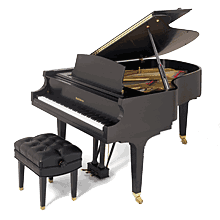
Grands vary from about five hundred to a thousand pounds, though a concert grand
may weigh as much as thirteen hundred pounds! If it were simply a matter of weight,
though, all it would take would be enough strong people to do the job. Unfortunately,
along with the weight come problems of balance and inertia, knowledge of which can
make all the difference in doing a moving job safely and efficiently. Piano moving may
conjure up images of men with monstrous arms and huge torsos, but actually two or
three people of average build can do most piano moving jobs - even grands if they
have some brains, experience, the right equipment, and a knowledge of just when
and where to apply a little force.
So, the task of moving a piano is not just a matter of weight. The asymmetric shape,
the fragility of the outer cabinet and inner mechanics, the uneven distribution of parts
-- all this and more demands not only proper equipment, but also an understanding
of the unique dynamics of balance and inertia that pianos pose.
Attempting to move a piano by yourself may easily result in a costly trip to the doctor
for both you and your piano.
Don't take chances, hire a professional!
A young woman asked her father to help her move a piano from one place to another
in her house. Her father got a couple of his friends to come along and they brought a
dolly. While they were lifting the piano - a full-size vertical -- it tipped back too far and
got away from them. While it was falling, its upper corner dug down through the wall.
The trench it made was deep enough to sever an electric conduit, which shorted and
began to burn. The "movers" were unable to stop the fire, which also spread to the
floor below, another person's apartment. After the fire department was done, there
was little left of the two apartments .... and the piano.
Obviously, this is an extreme example of the damage that can be inflicted when
moving a piano in do-it-yourself fashion. Even if you don't burn down your house,
there is a substantial risk of personal injury, not to mention damage to the piano.
Pianos are very heavy. The average spinet or console weighs in at from three
hundred to five hundred pounds, full-size uprights at about seven hundred, but
sometimes as much a thousand.
Grands vary from about five hundred to a thousand pounds, though a concert grand
may weigh as much as thirteen hundred pounds! If it were simply a matter of weight,
though, all it would take would be enough strong people to do the job. Unfortunately,
along with the weight come problems of balance and inertia, knowledge of which can
make all the difference in doing a moving job safely and efficiently. Piano moving may
conjure up images of men with monstrous arms and huge torsos, but actually two or
three people of average build can do most piano moving jobs - even grands if they
have some brains, experience, the right equipment, and a knowledge of just when
and where to apply a little force.
So, the task of moving a piano is not just a matter of weight. The asymmetric shape,
the fragility of the outer cabinet and inner mechanics, the uneven distribution of parts
-- all this and more demands not only proper equipment, but also an understanding
of the unique dynamics of balance and inertia that pianos pose.
Attempting to move a piano by yourself may easily result in a costly trip to the doctor
for both you and your piano.
Don't take chances, hire a professional!
| This excerpt was taken from The Piano Book, by Larry Fine: The definitive source book on buying & owning a new or used piano |

| © 2000-2021 Concert Pitch Piano Services. All rights reserved. |
| . |
| . |
| . |
| CONCERT PITCH PIANO SERVICES |


| | EXPERIENCED |
| CERTIFIED |
